Quick answer
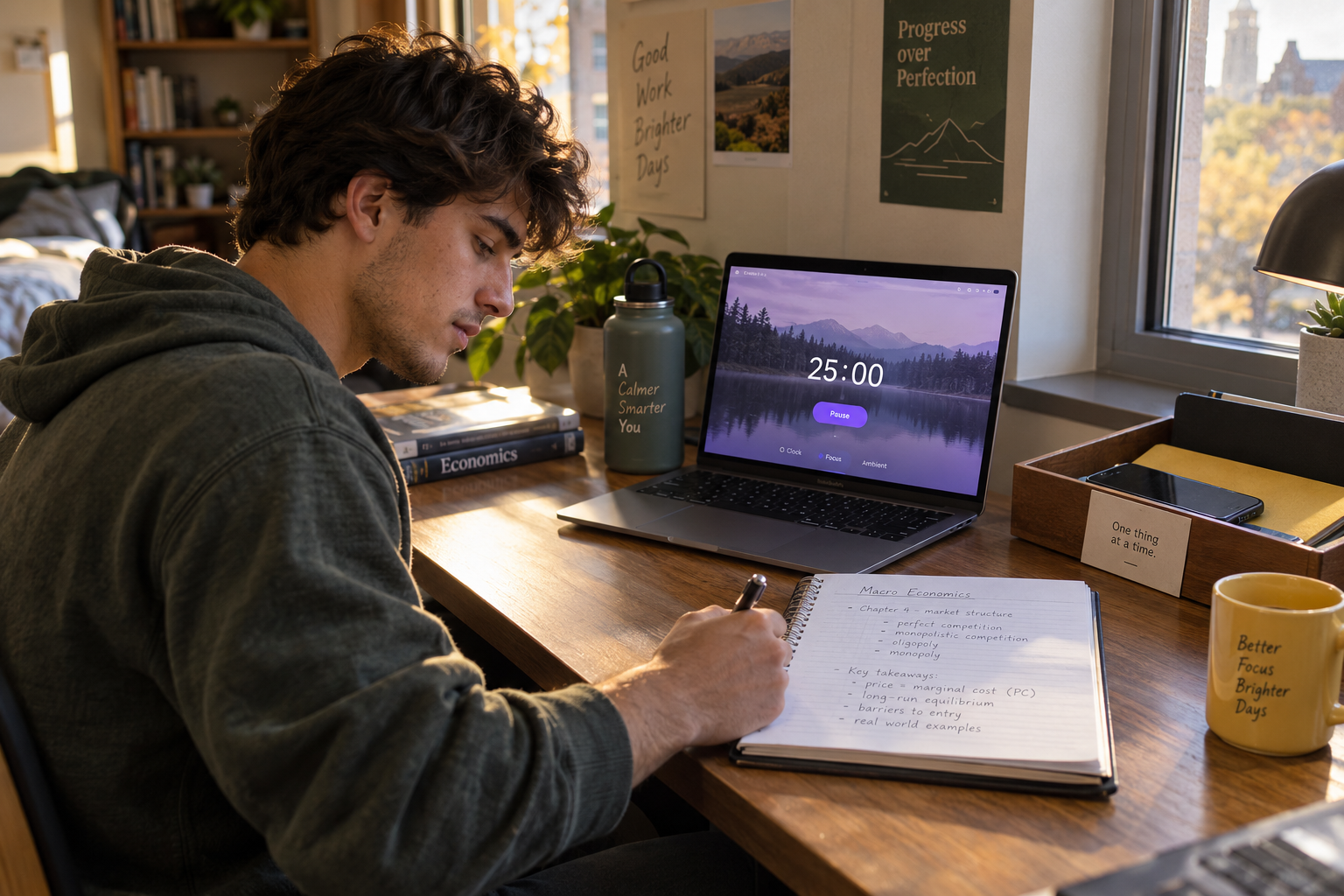
Single-tasking means giving one defined outcome the active foreground while other requests wait somewhere trustworthy. Choose a clear finish line, close competing inputs, keep a parking list, and work for one protected interval. You do not need to finish the whole project—only the one thing you named.
Single-tasking is not doing only one kind of work all day. It is deciding what has the foreground now.
That distinction matters because many forms of “multitasking” are actually rapid switching. The American Psychological Association summarizes research showing that switching can carry costs, especially when tasks are complex or unfamiliar. Part of your attention may also remain attached to unfinished work after a switch.
A calmer system does not ask you to remember everything while ignoring everything. It gives the active task a boundary and gives other tasks a safe place to wait.
Define one finish line
“Work on the project” is too large to protect. A finish line should be visible:
- Draft the opening paragraph.
- Review questions one through five.
- Sort the receipts from September.
- Choose three images for the presentation.
- Send the revised proposal to one reviewer.
The finish line may represent a complete task or simply the next meaningful piece. Clarity matters more than size.
A practical single-tasking setup
1. Put the active work in the center
Keep the required document, book, or tool visible. Move unrelated materials to the side, close extra windows, and make the next action physically easy to reach.
2. Create a parking list
When another thought appears, write it down instead of opening it:
- Reply to Jordan.
- Look up the citation format.
- Order printer paper.
The list tells your brain the thought is not lost. It does not mean you must act on it now.
3. Choose a protected interval
Pick an interval that matches the work and your current energy. Ten minutes may be enough for a difficult start. Twenty-five minutes may suit a familiar task. Longer sessions may fit reading, design, or analysis when interruptions are limited.
4. Make switching deliberate
If you must change tasks, leave a one-line restart point first. Then name the new foreground. Deliberate switching is different from allowing every notification to choose for you.
5. Stop at the boundary and review
At the end, ask:
- Did I reach the finish line?
- What is the next visible action?
- Does anything on the parking list truly need attention now?
This short review turns a timer ending into a calm decision point.
Single-tasking in a busy environment
You may not control every interruption. You can still reduce avoidable switches:
- Use full-screen or focus mode for the active document.
- Batch low-stakes messages into a defined window.
- Tell collaborators when you will check in again.
- Keep your phone outside your immediate reach when possible.
- Use headphones or one steady ambient sound as a work cue.
If an interruption does happen, use a short return routine instead of rebuilding the entire plan.
One screen, one finish line
In MinuFlow’s Focus space, keep the active finish line in Tasks & Notes, choose one timer, and let the rest of the screen stay quiet. The point is not to collect perfect sessions. It is to make the current work easy to find again.
Frequently asked questions
Is single-tasking always more productive?
No method wins in every situation. Some simple activities can comfortably overlap. Single-tasking is most useful when work requires learning, judgment, writing, memory, or careful decisions.
What if I remember something important?
Write it on the parking list. If it is genuinely urgent, leave a restart note and switch deliberately.
How long should a single-tasking session be?
Long enough to make meaningful contact with the task, but short enough to feel honest. Begin with 10 to 25 minutes and adjust from evidence rather than aspiration.
Last reviewed for source accuracy: October 2026.
Sources and further reading
- Multitasking: Switching costs — American Psychological Association
- Why is it so hard to do my work? The challenge of attention residue — Organizational Behavior and Human Decision Processes
- Ready-to-resume plans and task switching — Organization Science