Quick answer
Keep only the materials for the current task in view, give your phone a place outside easy reach, reduce speech and unpredictable noise when possible, and prepare the next action before each session. The goal is not a perfect room. It is a space that asks you to make fewer unnecessary choices.
Start with a 60-second reset
Before studying, clear just enough space for:
- the current book or worksheet;
- one notebook or document;
- the tools the task actually needs; and
- water, if you want it.
Move unrelated mail, hobby items, extra books, and yesterday’s materials into one temporary container. You can sort them later. The first goal is a usable surface, not an organizing project.
Give the phone a physical home
Silencing a phone may not remove the pull to check it. Experimental research has found lower performance on some attention or cognitive-capacity measures when a participant’s own phone was present, although effects vary by task and study.
Use a physical boundary:
- another room;
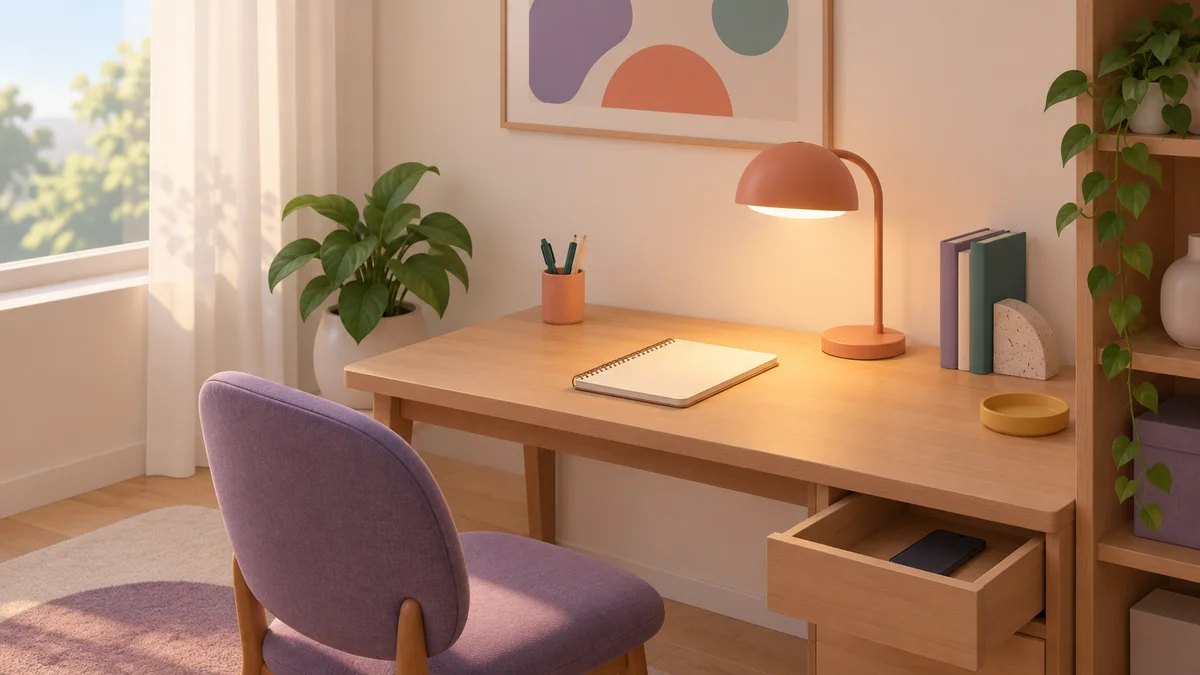
- a drawer across the room;
- a bag behind you; or
- a household charging spot.
If you need the phone for authentication or a timer, complete that step, then return it to its place. Face down on the desk still keeps it inside the study scene.
Reduce sound competition
Speech is difficult to ignore when you are reading or writing. If your home is noisy, try the smallest realistic adjustment:
- close the door;
- move away from the television;
- tell others the end time of one short session;
- use comfortable ear protection; or
- play a low, steady, nonverbal sound to mask unpredictable noise.
A meta-analysis of auditory distraction during reading found small average costs from background noise, speech, and music, with intelligible speech and lyrical music among the more disruptive conditions. Individual responses still differ. Compare the same task in silence and with a quiet mask using the MinuFlow sound guide.
Make the next action visible
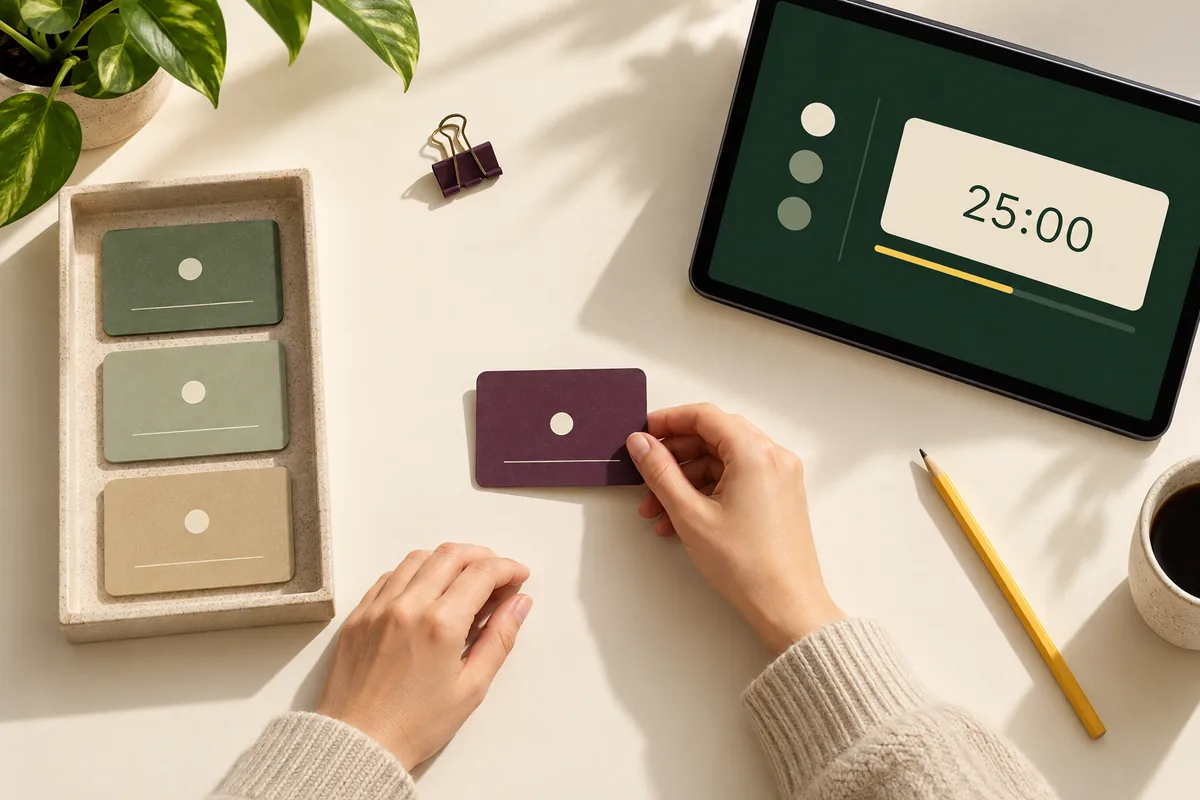
An empty, beautiful desk can still leave you unsure what to do. Place one action card beside the material:
Read pages 12–15 and write the answer to question 2.
That is more useful than “study chemistry.” When the session ends, replace the card with the next action. If the work is too large to name in one line, use the assignment breakdown guide.
Separate storage from attention
You may need many books and supplies, but they do not all need to be visible. Keep storage nearby and the active surface simple.
- Active: only the current task.
- Ready: the next one or two tasks, out of direct view.
- Stored: everything else.
This works at a permanent desk, a kitchen table, or a portable study basket. A consistent setup can matter more than owning special furniture.
Use light and comfort as practical settings
Make the page or screen easy to see without glare. Choose a chair and position you can maintain without strain. Keep the temperature and ventilation comfortable when you can.
Do not turn the search for a perfect setup into a delay. If changing the lamp takes one minute, do it. If redesigning the room will take an afternoon, begin one session with the current safe setup and improve the space later.
Create a small start and stop ritual
At the start, put the phone in its place, clear the active surface, write the outcome, and start the session. At the end, mark where you stopped, write the next action, close the material, and take a real break.
The screen-free break ideas can help you leave the workspace without losing the return path.
Build for the room you have
Your study space does not need to be silent, private, or permanent to be useful. Choose one environmental change that removes friction today. Then open MinuFlow and test the setup for one short session before adding anything else.
Sources and notes
- Ward et al., “Brain Drain: The Mere Presence of One’s Own Smartphone Reduces Available Cognitive Capacity”: journal article.
- Skowronek et al., “The mere presence of a smartphone reduces basal attentional performance”: PubMed record.
- Vasilev et al., “Auditory Distraction During Reading”: full text.
- Editorial boundary: phone-presence and sound effects vary across tasks and people. The article recommends low-risk environmental experiments, not guaranteed performance gains.